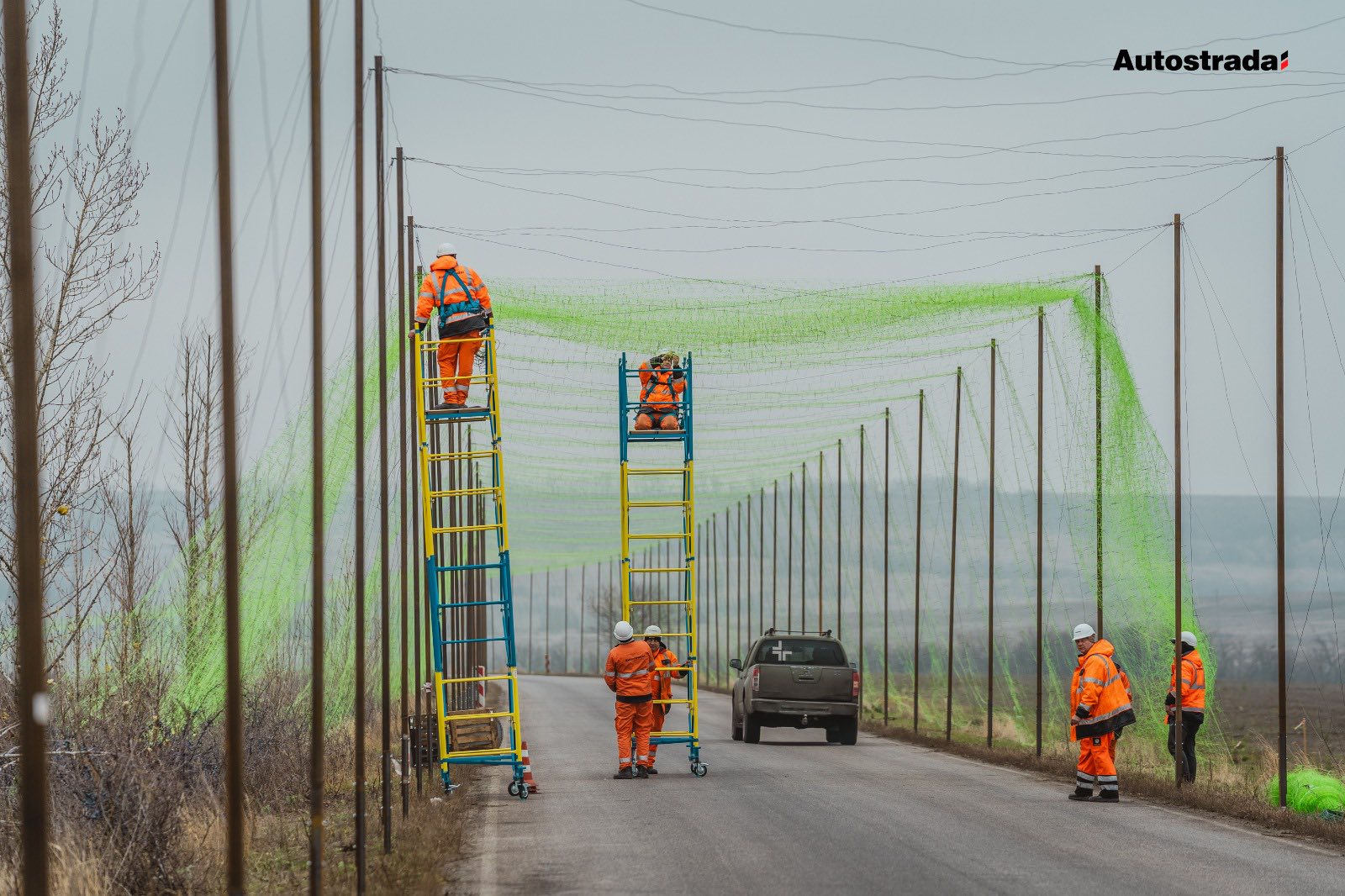
The Avtostrada company is constructing protective structures made of anti-drone netting, a task that was previously performed exclusively by the military. Thanks to streamlined processes, the company's own production capacity, and its equipment fleet, crews can install the netting three times faster. This enables them to cover nearly 500 meters of roadway per day.
The company’s owner Maksym Shkil announced this in a statement, the CFTS portal reports.
These are the routes used daily by military convoys, evacuation vehicles, vehicles carrying the wounded, and humanitarian cargo. Every protected meter increases the chances of saving lives and maintaining uninterrupted frontline logistics.
These structures form an effective barrier against drone attacks, particularly FPV drones and kamikaze drones.
Several specialized Avtostrada teams work simultaneously at the site. Barrier crews install metal channels that serve as structural supports. Then, road crews attach shaped pipes to the supports, tension the wire, and install the anti-drone netting.
Because of heavy traffic, which complicates the work, a separate road crew works outside the main construction site. There, they prepare large mesh sections of netting and assemble metal structural elements to speed up installation on the roadway.
Construction essentially takes place within a "kill zone," under the constant threat of attack. Reconnaissance drones hover above the road, and glide bombs and Lancet drones frequently attack the surrounding areas.
In addition, Avtostrada is building protective structures for primary and secondary energy infrastructure facilities. This work is being done in high-risk areas (critical infrastructure sites), so the locations and technical details are not disclosed for security reasons.
Where completed, second-tier protection systems have repeatedly proven their effectiveness: they have withstood impacts and provided reliable protection against critical damage.